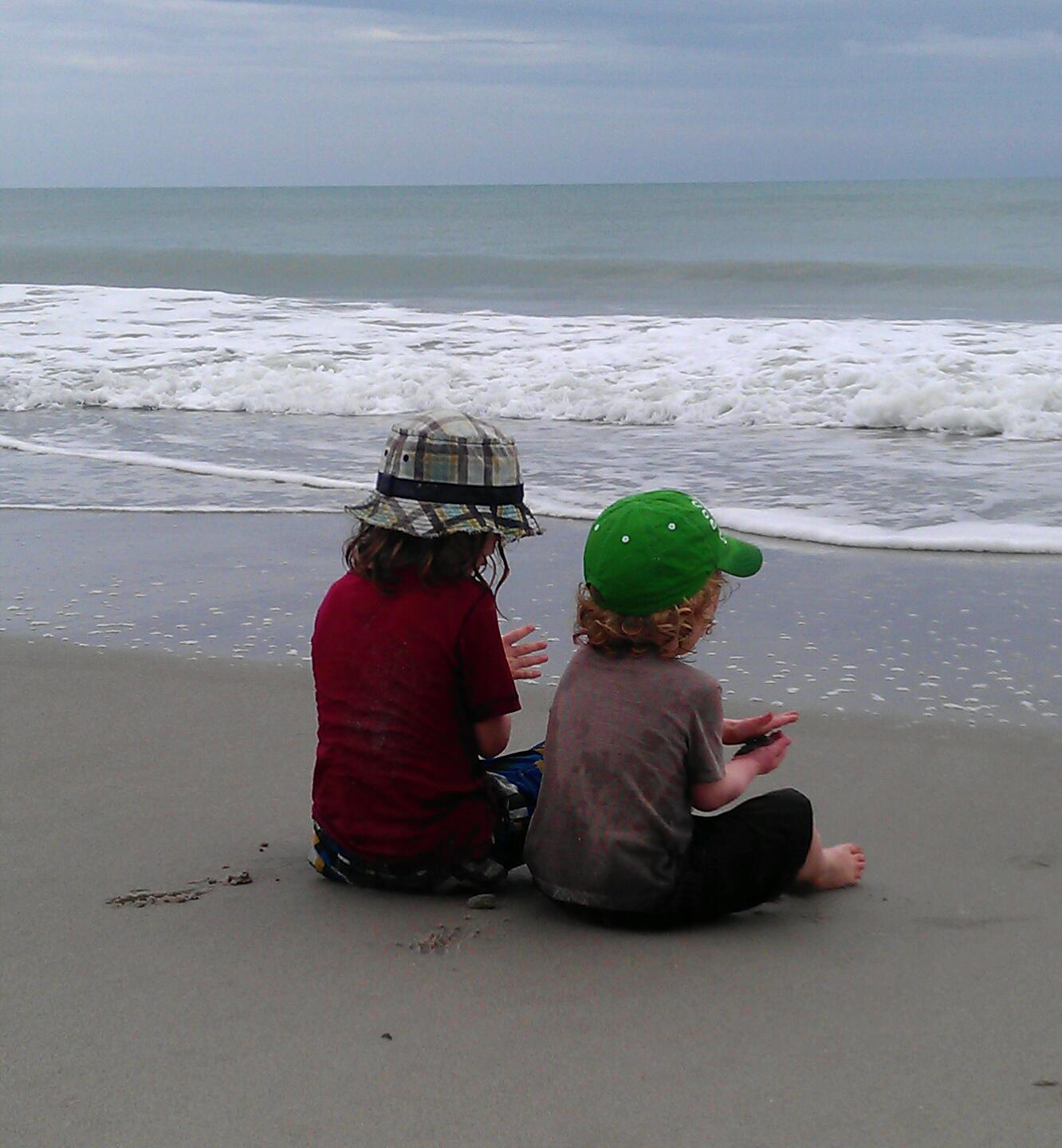
Ballerinos

Before I had children, I believed that gender was a construction and that the ways in which boys and girls relate to the world, design their play, react to stimuli, and spend their growth energies had more to do with nurture than nature.

Boys, I knew, could play with dolls and nurture just as girls could play with trucks and be rough and loud and scatalogically amused. These are equally true of men and women.

My first son bore out this hypothesis, adoring ladybugs and glitter, talking incessantly, and nursing his dolls.

My second son tends toward trucks, physical over verbal games, and enjoys rough play way more than I ever thought possible.

They both like pink, dancing, and music, though. So we spend a fair number of hours leaping around the living room. For science.

IMAG2871

Yesterday both boys had earned new ballet slippers (by growing, not by any particular behavior; I’m trying not to base our family’s existence around rewards and discipline) and put on their leotards for a dance party. After I helped the little guy into his, I went to the kitchen to get something and heard:

“Now that you have your leotard on, try to hit me.”

I reminded everyone that dancing in our house means hands to yourself. (I’m thinking very clearly with every parenting choice about the rules we’ll have in high school, so dancing with hands to yourself starts now, with your brother. Otherwise, Kevin Bacon wins.)

“Okay okay, okay,” my oldest reassured me.
“Butter. Use your ballet slippers to try to kick me.”

I’ve spent a lot of time during my life with a lot of ballerinas, from tiny rec center trainees to honest-to-goodness professional metropolitan company members. And I have heard a lot of sentences begin with “Now that you have your leotard on…” and “Use your ballet slippers to try to…” but these particular hitting and kicking constructions are new to me.

Let me note the obvious caveat about sample size and repeatability of results. None of this is enough for an actual hypothesis yet.

But the evidence is leaning me toward a “ballerinos are an entirely different group of artists” theory.

Win. Seriously.

A few weeks ago I read Carinn Jade’s post about gratitude. She has lovely things to say about teaching children to think about their lives in perspective, to teach ourselves to find the bright side by living in thoughtful meditations on gratitude.

After reading it, I decided I’m a terrible parent appreciated the reminder that I should be focusing the family on gratitude. We have always, every night, talked about what each person’s favorite and most challenging parts of the day were. We’ve used it as a way to learn evaluative skills and to hear how other people address challenges.

But other than Thanksgiving, we don’t spend a lot of time using the words grateful and thankful. I’m rather embarrassed about that, because I know full well that reflecting upon that which makes life wonderful creates a cycle in which gratitude makes us see events and people in a better light, which makes us more grateful. I’ve been reading Secrets of Successful Families and Raising Happiness, and both point me in the same direction Jade’s post did: get everyone in the family thinking about life’s gifts, and appreciate them together. It helps.

So we started. I intended to circle the gratitude wagons at dinner, but meals are a reasonably raucous time of “please don’t call each other buttface,” and “please don’t call each other poopface, either,” and “please eat the food or leave it on the plate; food is not a toy,” and “yes, you can have more, but please finish what you have first,” and “did you say that to make him feel good?”, “dear gawd am I ever going to eat more than two bites without someone asking me for something?” moments.

But I finally remembered to ask what the boys are grateful for as we walked to school.

I told them I am grateful I have three wonderful guys in my house to see every day.

Peanut, who is seven, said he is grateful for friends.

Butter, the three-year-old, said he is grateful for cake. If I’d thought of it, I might have started there, too.

I said I am grateful for the way Spring smells and feels and shines.

Peanut said he is grateful that we have enough money to live in a house.

Butter said he doesn’t want to do this any more.

I said I’m grateful we have so much wonderful family to visit and play with.

Peanut said he’s grateful for tigers and leopards and he wants to try to save them.

I judge myself pretty harshly, readers, about the job I’m doing parenting because my kids fight a lot and Spouse and I are not patient enough. But it seems to me that if my seven year old is grateful for friends, his home, and his place in the world, I’m doing an okay job. A genuinely okay job.

And I’m grateful for that.

Procrastinate

Someone said, in an interview or an article or on an NPR game show or something like that, that you should procrastinate doing important things by doing other important things.

What the?

No more procrastinating with useless things I should never do?

Actual productivity while procrastinating?

If this is a thing—a realio, trulio thing—then what the heck is the Internet for?

Now, if you’ll excuse me, I have to go complete several tasks from the top of my list to avoid doing…the other bits on the top of my list.

Boooorrrring.

Supreme Leader of Himself

Butter has an announcement he’s been pushing through various media sources.

I am not his grownup.

This is generally only an issue he presses when I want to tell him something, ask him something, or remind him of something.

Me: Butterbean, what do you want for breakfast?
B: Mommy! You not my growmup!

Me: Butter, please hold hands.
B: Mommy! You not my growmup!

Me: Butter, time for bath.
B: Mommy, you ‘toopid. You not my growmup!

(I have not mentioned to him yet that it sounds as though he thinks that grownups are secretly one part adult and one part muppet. Because then I’d have to introduce muppets.)

I asked him who is, in fact, his growmup.

“Nothing. No whobody.”

Okeedokee.

I will keep you apprised of his ongoing campaign for independence and emancipation, scheduled to run from now until about the time he’s 22 and graduating with a dual degree in Theater and Public Policy.

When you’re down and troubled

Are you weary after the past week? Between Boston, Texas, Washington, and Watertown, I’m weary. And deeply sad.

Last Monday I vowed I would not use my phone at all. My son and I played all morning, and the phone rang. It was my mom, calling to tell me about the breaking news.

I couldn’t stop reading news on my phone. Text messages and Twitter and The Globe; I spent more minutes than I’d like to admit ignoring my child at the playground so I could scan through the news, cry, and scan through again. It wasn’t in vain, though. When a dad at the playground saw me crying he asked if I was reading about Boston. I told him I was. He said his brother was a volunteer at the finish line and that nobody could get a hold of him. I checked my Twitter feed and gave that sweet neighbor (who was doing a damned fine job of calmly and mindfully playing with his son while he wondered about his brother) the number to call and the Google site to check for his brother’s name. I let him use my phone because his had no service.

Then the breaking news of West, Texas. I saw the tragic story on Twitter before the television announced breaking news. My heart stopped when the Breaking News silence stopped whatever trivial crap we were watching, and I said aloud to Spouse, “Please, gods, no more breaking news.” I had already gasped at the Tweets and told him what they knew about the explosion in Texas, so we were sad and scared but not shocked. Until we saw the video of the blast. I’m so sorry for your pain and fear and losses, West, Texas.

Then Thursday, just before bed, after fuming very vocally about the disgusting cowardice of the United States legislature where representatives are supposed to vote, not just avoid taking a stand one way or the other, I checked Twitter. Manhunt in Boston. Young police officer dead. Chase and gunfight on a Watertown street I’ve been on dozens of times and that I still associate with love and peace. I stayed up almost all night watching reporters talk about the scared people near my improv and stand-up comedy home at MIT, the scared people right near a dear friend’s former house, and scared people all over the town whose hearts had broken a few days before.

Breaking news.
All night.
The heartwrenching, terrifying, “Dear Heavens, let everyone be okay” kind. The kind it’s so important to watch that the next day doesn’t feel like tired. It doesn’t feel like anything but shellshock.

It helped a bit to read things like this from The Onion.

But something really helped me last week, as I read and sobbed and wiped my eyes so I could read more.

Mr. Rogers helped me.

Before I read the lovely, hopeful letter from Patton Oswalt, someone in my feed Retweeted a quote from Mr. Rogers, “When I was a boy and I would see scary things in the news, my mother would say to me, ‘Look for the helpers. You will always find people who are helping.'”

And thus began my effort all week to look for the helpers.

Like this guy.

And these guys

And the thousands who opened their homes to sad, scared runners

And even these guys

So in honor of Mr. Rogers, my good friend and neighbor Mr. Rogers, I’m going to spend this week being kind to every I see, and teaching my kids about the helpers.

(Below are some more, upbeat, old school Mr. Rogers for you. If you’re anything like me, watch one or two alone first, so you can cry big old fat tears for the really good people in this world.)

PBS Kids’ full episodes of Mr. Rogers’ Neighborhood

Boston marathon training

In my pre-kids life I ran a lot. I loved triathlons and competed regularly, in part because each time I trained for a marathon, I got a stress fracture.

My doc said it was time to take up swimming or cycling. So I did both.

Four times I trained. Four times I’d done a long run around 22 miles. Four times I had bone scans that showed rapid bone repair suggestive of a fracture.

So I gave up on marathons.

And after kids, I gave up on racing entirely.

But ever since Monday’s horror, I want to earn that blue and yellow jacket I keep eyeing on Spouse’s side of the hall tree. I want to wear a BAA T-shirt until it has holes and embarrasses my kids. I want to wear the logo now so intensely I can’t stand it.

I’ll train to see if I can qualify, which would require a 3:45 marathon this year. If I can do that, run 26.2 miles at an 8:34 pace (which is a stretch, considering my fastest 10K was 48:00 and my half-marathon pace was a comfortable 9:00), then I’m running Boston next year.

I’ve tried being one of the tens of thousands who stand on the side and cheer their guts out for hours and hours. It’s awesome.

But it gets dizzying, watching all those runners go by. I was almost seasick, by the end of the two races I supported.

So I’m going to try it the other way this time.

Either way, I will be in that city next Patriot’s Day. I stand with Boston and I will do my best to run in Boston.

Shameless Self Promotion

BlogHer has announced their Voices of the Year submission process, for outstanding blog posts of the past year.

The Empress has suggested that we all submit our best work.

So I have. And so have many outstanding bloggers.

If you recall liking any of the following posts, do please go vote for them. Clicking the links below will get you to the BlogHer page where you can vote or click through to read (or reread) my post.

Time Out, in which I start locking myself in the bathroom when my kids hit me.
Selling Ourselves Short in which I ponder the cost of selling our blogs to low bidders
Nick in which a dog teaches Butterbean and me about end of life kindness
A Brush with Autism in which I redraw my boundaries for an autistic boy who needs to do things his way.

While you’re there voting for my posts, check out the other great writing on the Interblogs. Submit posts you’ve read and loved. Vote for your favorites. The other bloggers will appreciate your support just like I do!

Devastation

As a former Boston resident and partner to a frequent Boston marathoner, I’m devastated tonight. My thoughts are with those who were injured, their families, Boston residents, selfless first responders, and members of the running community. I don’t even know what to say to them, except “Tell us what you need. It’s yours.”

I don’t understand why someone would murder and maim people who build a loving community, who celebrate a great city and a historical event, who want nothing more than to be and do their best.

But I’m getting mired in the pain and the ugly and the fear. So I want to step back for a moment to something that has always bothered me about the way in which we discuss tragedy.

Please, please understand this comes from a soulful place of love, empathy, and concern. I am not being sarcastic, I’m not joking, and I’m not in any way minimizing.

Ready?

Why do we react so much more intensely when the dead include children? Reports keep singling out the injury reports of children and the death of a child as though killing a child is worse than killing an adult.

Is it? Are we actually assigning children more worth than adults?

I know that I was affected at a much more visceral level hearing that one of the dead was so young. So heartbreakingly young.

But the other people who died were much younger than they were supposed to die, too.

Believe me, I find the details of those children treated for major injuries horrifying. I’m a mother. The thought of any children being hurt in any way actually keeps me awake at night. I am sick at the thought of a child hurt in a bomb blast.

But I’m just as sick to think of someone’s father being hurt in a bomb blast. Someone’s sister. Someone’s boyfriend. Someone’s mentor, sponsor, lover, friend, colleague…I’m sick about every person hurt, every limb removed, every death.

Sick.

But I’m asking, in terms of our use of rhetoric, our telling of stories, our accepted morality that says it’s worse to intentionally hurt a child: why do we focus on the children?

I understand completely why it’s not okay to hurt people, and why it’s reprehensible to hurt a child. But if we’re talking mass casualties, if we’re talking bomb blast that kills indiscriminately, why do we focus on the dead child more intensely than the other dead people?

Children don’t know the extent to which some evil really creeps; they don’t know Holocaust or slavery or war or torture. They don’t know. So their early end is somehow more horrible? I feel that, but I don’t understand it logically.

Is it because children are innocent? Most citizens of most countries around the world, it seems to me, are pretty innocent. (But wait, my heart says, children are way more innocent.)

Is it because children have their whole lives ahead of them? Most marathoners and their family and friends, it seems to me, have a whole lot of life left, too. (But wait, my head reminds me, children have more life left.)

Is it because children are so desperately loved? Most fathers, mothers, sisters, brothers, wives, husbands, girlfriends, boyfriends, friends, aunts, uncles…you get the picture…it seems to me, are pretty dearly loved, too. (But wait, whispers my soul, children are loved more completely and unconditionally. I hope.)

Is it because children can’t protect themselves? Most people moving past or standing near a hidden bomb, it seems to me, can’t protect themselves, which is, of course, the point to the horrible, disgusting people who did this.

Is it because there is a greater shock value to a child’s injuries and death? I swear I’m not trying to be cynical, but do reporters focus on the bomb shrapnel in boys and girls because we’re all so horrified that we keep reading? Tell the story of a runner, of a bystander, but really push hard on the story of a child because that story makes us gasp out loud? Maybe. I did gasp out loud for that eight-year-old.

Why?

Is it because children aren’t supposed to die? Is that the core of this? That with each year of life we’re getting closer to dying, but that it’s just horrifically, stomach-turningly shocking to hear that an eight-year-old was killed?

Or, say, 26 first graders?

I don’t understand the disgusting malice that would make someone build, plant, and detonate a bomb. I don’t. I don’t understand the sociopathology that would make someone disregard human or animal life. I don’t. I don’t understand where we’re supposed to go from here, as a nation and as world citizens. I don’t understand how people all over the world deal with frequent deadly attacks.

And I don’t understand why it’s an eight-year-old’s murder at a sporting event is so much worse than an adult’s murder at a sporting event.

But there’s a little piece of me that feels that it is.

It’s not fair to the families of the injured and dead in a terrible tragedy, and I hate saying it for the illogic it suggests, but I’m pretty sure injured and killed children wrench more than anything else. A child’s life is not worth more than anyone else’s. But somehow their death cuts more deeply.

I think.

What do you say?
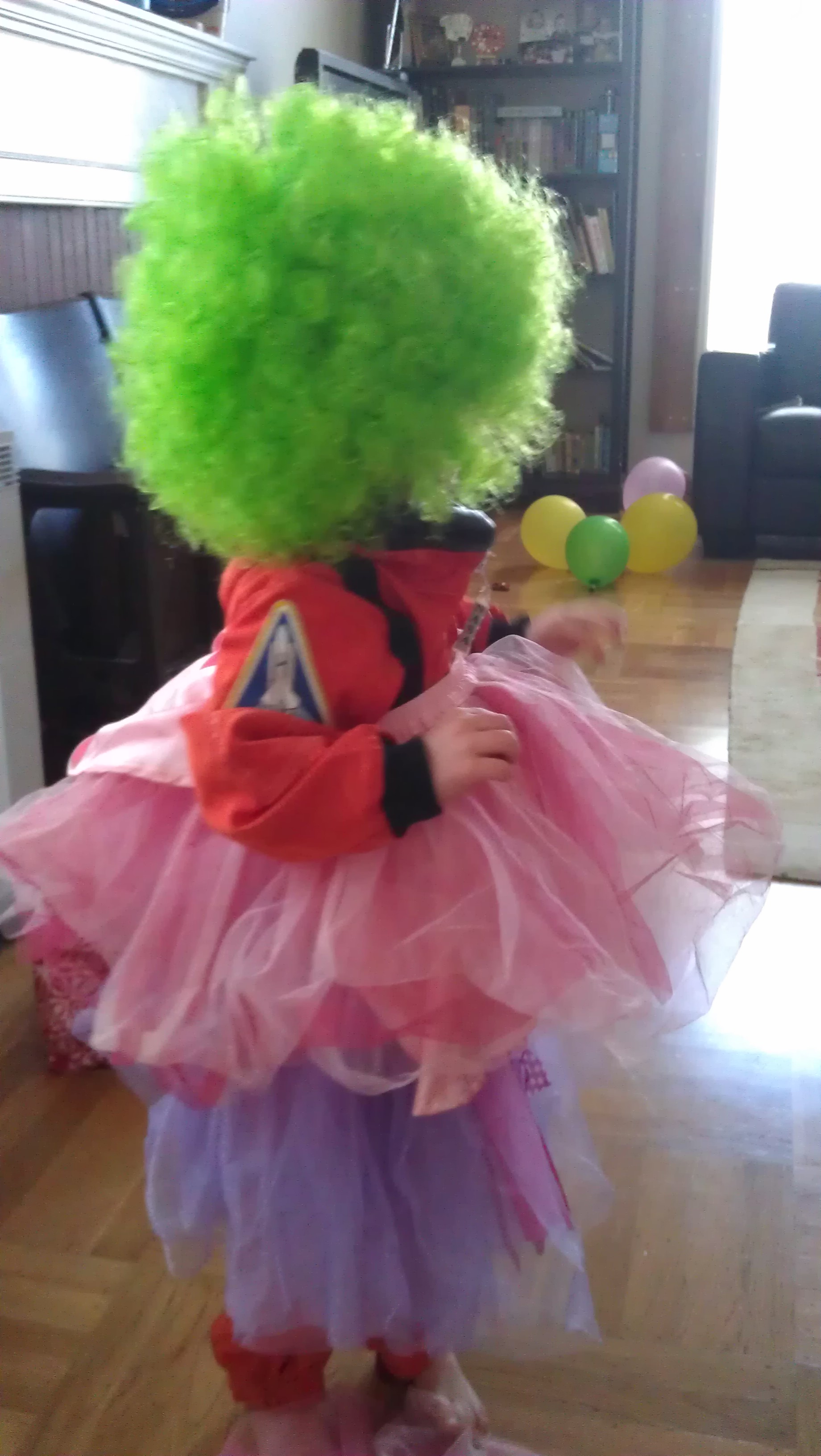
Daddy say…

My three-year-old, goddess love ‘im, is a compulsive liar.

Yes, I know there is no lying before about age seven. I know kids tell their version of the truth for a variety of reasons, most of which is wishful thinking.

But I have never met a toddler who does it like this kid.

Him: Mommy, I want a keekoo.
(He still makes me want to kiss his face off with the speaking backwards. Keekoo=kookee. Cookie.)
Me: Let’s eat breakfast now and have a cookie with lunch.
H: Noooooooooo! Daddy say keekoo now.

Right. I’m sure Daddy told you that cookies are fine at 6:45 a.m. But I’m gonna override him on this one.

When I tell him it’s time to wash hands, he climbs onto the counter and into the sink and tells me that Daddy says that’s the way to wash hands.

When I hand him a cup of water and he pours it all over the floor, I remind him that water is for drinking. Water on the floor is a mess and people fall down. He then reminds me that, with all due respect to the towel I’m handing him for the cleanup, “Daddy say pour, pour, pour, leave right there, no touch.”

Fine. If Daddy says you should pour water all over the floor, leave it, and not touch it, why then you go find Daddy and he can help you clean.

“Oh, pumpkin, did you fall? Oh I’m sorry. You slipped because there was water on the floor. How did that get there?”

“Daddy do dat.”

He’s probably waiting for me to make Daddy clean it up, but I know what will happen if I do. Daddy’ll blame the cat.

Internet goddesses

Does your god answer your prayers? Do your children do what you ask? Do you feel heard at all?

This morning I explored my new zen happy place: I played with one of the boys’ remote control robots. Because…get this…it does whatever I tell it to do. I push the forward button and it goes forward. I push the backward button and…I swear…it goes backwards.

I love the thing. I fawn all over it. It listens.

And then something even more miraculous happened.

First, I asked. All I wanted was some Easter candy.

Then, an answer. From the goddesses of the blogosphere.

IMAG2916

Not one, but two bloggers sent me bags of black jelly beans. Big, hefty bags full of jelly beans.

Seriously? I asked for something outlandishly weird and people took the time find, organize, and mail? I can’t even get my kids to put on their shoes when I ask nicely.

That, right there, is why people use social media.

Finally. Someone listens.

(Seriously, if nobody hears you today, get yourself a remote control robot and a Twitter account.)

To the moon and back

You know what I love about long distance with children?

1. Their severely curtailed sleep means there are literally dozens more hours to spend with them throughout the week.

2. And their misfiring, sleep-deprived brains say very silly and adorable things. When they’re not screaming or whining or sobbing about something.

3. The newness of being in an unfamiliar place means their naturally scientific brains will see and absorb everything, from impressive technical facts about mollusks and brown pelicans to the precise copy from a barely overheard erectile-dysfunction ad playing on a television two rooms away.

4. Of course, vacation can mean wonderful time with extended family. Being surrounded by loving adults can make anything better and can help you see clearly. In fact, it can help you see how even twice the number of adults does not make parenting small children any easier. Seriously, evidence is starting to suggest that it would take twenty child care experts (or kindergarten) to get me a semi-regular shower. Or a run. The tally of shower-free-days to reasonably-scented-days on vacation is even worse than at home. (I did get to go bathing suit shopping, though. That experience is actually much easier thousands of miles from home. I highly recommend you shop for your most loathed piece of clothing when you’re far, far, far from mirrors you recognize.)

5. Children on vacation have delightful appetites and a charmingly predictable neophobia that means all they’ll eat is crackers. Crackers are good, quick energy for explosive volume and wild beach play. Yay for cracker-exclusive dining. Nothing but good can come from a week of an all-cracker diet, I’ve heard experts say.

6. Frantic children, geographically displaced by well-meaning adults, allowed to write their own sleep schedule, and fed nothing but crackers run around like wild monkeys, desperate for outside activities. This means a wonderful opportunity to teach frequent, thorough sunscreen application. Because vacationing children don’t have time to wait for adults to wash and sunscreen their own faces, extended vacations are a delightful reminder why paraben-free mineral sunscreen is a terrible idea for middle-aged skin. Lots of sunshine with children is a quick and easy path to enormous, painful breakouts. Thanks for the reminder, Spring Break!

7. At the end of the journey, flight attendants are highly trained and extensively experienced in handling exhausted, carbo-loaded children. They offer, with subtle glances and measured words, a lifetime worth of child-rearing assistance without even being asked. Hurray for unhelpful unsolicited advice! It makes us at once shamed and hopeless about our parenting.

But every parent knows reentry is the toughest part of vacation. No matter how long you’re gone, the first two days back are characterized by turbulence. Nobody’s well rested, well fed, or well adjusted. One part wanting to go back, one part relieved to be home, one part sick of being together, and one part daunted by jumping back on the treadmill you had forgotten is set permanently at 12 mph.

This means the very best part of a long vacation with a transcontinental flight is that those amongst you who still use a car seat will sleep on the plane. Nobody else will, including those who’ve graduated to a booster. So Day One of reentry will be characterized by exhausted, snippy people calmed by a somewhat reasonable three-year-old. Let me say that again (so I’m the only site on the Interwebs that will include the statistically significant phrase “somewhat reasonable three-year-old”): Somewhat. Reasonable. Three-year-old. So relatively rested, in fact, that when his older brother falls and cuts a gash across his face in the middle of Day One at home, the three-year-old will fetch the ice pack while you’re trying to decide whether to see the doctor (yes) for stitches (no, thankfully).

See? Travel with the whole family. Think big. The upsides are huge. Learning and perspective and crackers.

Aaaaaah. Three.

Some of you might not know that Three-Years-Old is the portal to the Seventh Circle of Hell.

I’m here to tell you, again, that it is.

I know about Threes’ seven-layer dip of insanity, lack of impulse control, emotional immaturity, irrationality, impatience, illogic, and incontinence because I still have PTSD from my eldest’s year-long bout of The Threes. The day he threw furniture at the closed door that signaled “Mommy Needs A Timeout to Keep from Beating You.” The day he assaulted me, apologized to get me closer, then attacked again. The day he raged because I wouldn’t go out in the rain and drive alone to the store to bring him back mushrooms, a food he didn’t like. The day he peed in the cat box because he didn’t like my rules.

Three. The “at-least-it’s-good-for-a-laugh” antithesis of good times.

I’ve braced myself for Butterbean to turn Three. I’ve girded and steeled and all other architectural metaphor-ed. I’ve prepared.

So when he spun into a tantrum because I dared to say that being grown up means I won’t, in fact, get taller, I tried not to laugh. He screamed for half an hour that I have to get taller right now.

I wish, buddy. But you are not the first to try nonsense tactics. And you will not win. Not only do I not refuse to get taller right now, I refuse to talk about it.

When Butter recently threw himself out of the stroller and writhed and yelled and tried to hit me as I asked how I could help, I dispassionately plopped him back in the stroller and kept walking. And repeated one house later. And another, and another, each time offering to carry him, cuddle him, or let him push the stroller as long as we kept going. When it didn’t work I just kept breathing and tossing his enraged body back into the stroller. Because I know what happens when you negotiate with Three-Year-Olds. All of this blog from 2009 is what happens when you negotiate with Three-Year-Olds.

But a new calm has come over me. I can outlast Three. I have done it before. I can survive earthquake and fire and oncoming traffic that smashes my ride at 106 miles an hour. And graduate school. If I am still standing after all that, I can survive another three-year-old. I’m not alone in my plight, and there are experts whose advice can help.

In fact, my newly crowned Three’s tendency toward batshit insane actually has his seven-year-old brother taking a turn for the avuncular. Battles of wills are being dropped rather than pressed, sharing is increasing, and feelings are being calmly listed more this month than in all of last year. Today Peanut explained to his brother what to do when you’re really mad and draw back to kick someone. “Change your mind,” he said, “and talk about how angry you are instead.”

Maybe there’s an upside to Three. Or an upside to Seven. Or to the synergy between them.

I hope so. We could really use an upside or two or Three.