Sounds about right

I flew through an entire audiobook today, and am settling well into the idea that this particular medium is ideal for histories and biographies.

As the book finished, I was changing sheets on the bunk bed, the little guy was in the bathtub, and the big guy was sorting laundry. It’s getting harder to tell his clothes from mine, and we now take longer to check tags to make sure he doesn’t wear my shirts to school.

I flopped onto the lower bunk to choose my next audiobook. Unfortunately, I told Peanut as he threw his brother’s laundry across the room, other library patrons are currently listening to all the good books. Darn the choice to live in a town where other readers have the same tastes.

As the guard changed and the little guy clambered out of the bath to let his brother in, I found a guided meditation book and clicked to hear the sample. Bells gently chimed, subtle music rumbled from my phone.

“I like that book,” said Butterbean.

“Oh, yeah? It’s about meditation.”

“Well, I like it,” he said.

“Why is there a booger in the tub?!” Peanut hollered from the other room.

“Remember when I told your brother to quit blowing his nose in the tub?” I hollered back and shot a look at the little guy, who giggled.

“Come get it! Please?” he bellowed. The meditation chimes kept bleating at me. I brought the tub-bound, lanky young man a tissue. Without complaining that he has to recycle tub water, he wiped. I tossed and washed.

“That’s gross,” he said. “Really, that’s gross!” he hollered.

“Mom!” hollered the little guy, still in the bedroom with the meditation sample, “he’s teasing me!”

“Am not!”

“Teasing, teasing, teasing! Stop it I don’t like it!”

I walked back into the bedroom. The meditation chimes had stopped and I knelt beside the bed to cancel the sample. Peanut called for me to fetch more fraternal flotsam.

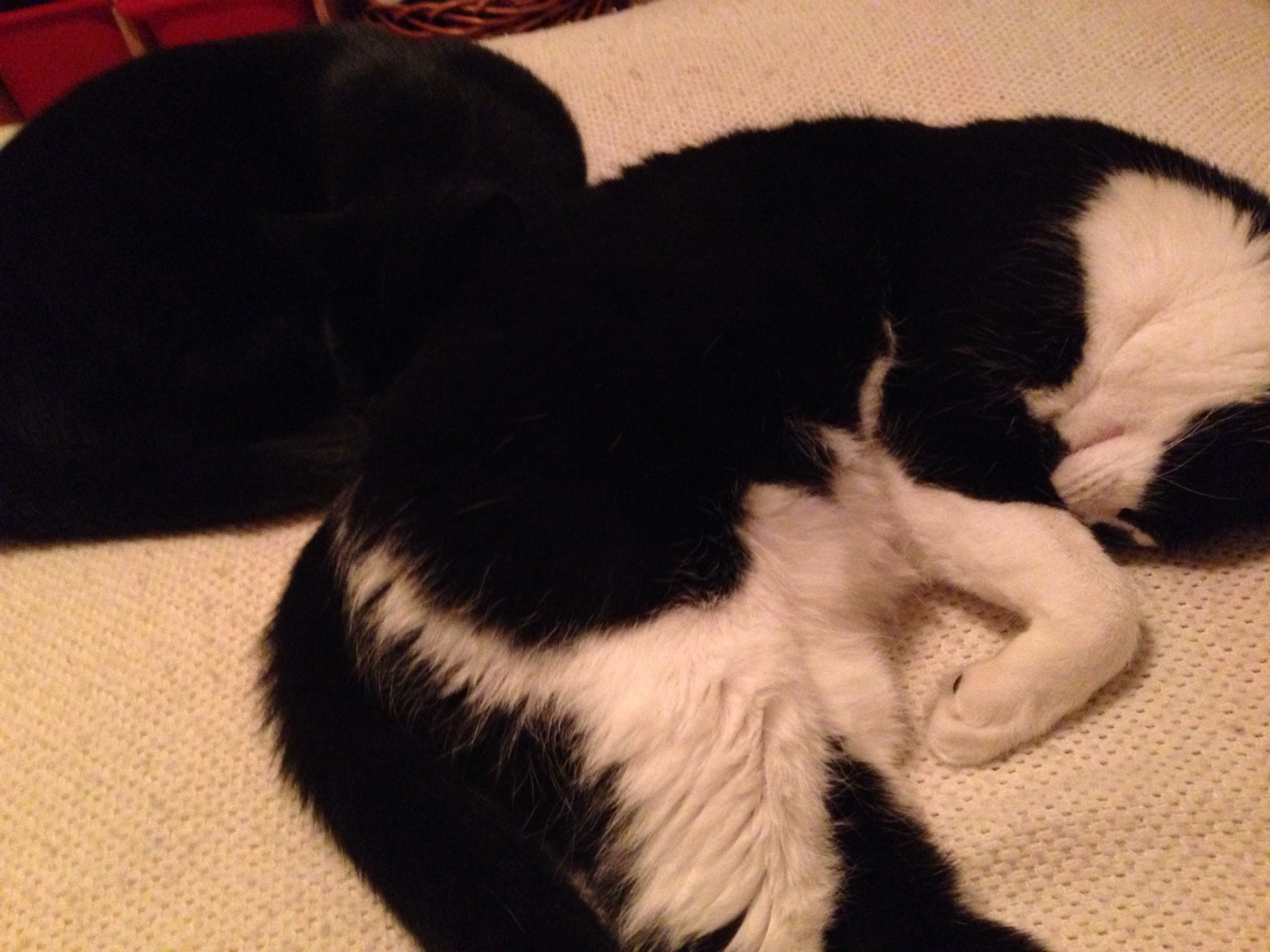
At just that moment, an earthquake rumbled and I held the bunk bed, checking the intensity and assessing the position of both kids. I could move the preschooler into the doorway and…wait, it’s not an earthquake. It’s just the cats fighting on the top bunk.

I turned off my phone and told the little guy to choose his bedtime books.

There’s no way guided meditation on my phone is the sound I need in my evening, even if Butter likes it. I need teasing and whining and giggles and silly, growing children, and cat earthquakes.

chaos, an interpretive dance

chaos, an interpretive dance

I also need another good nonfiction listen tomorrow. Hook me up, Berkeley library patrons. Return your audiobooks. I could use a copy of Salt, NPH’s memoir, or Dataclysm.

My app and me

I don’t think writing on my phone will ever feel as natural as typing. But tonight I’m trying the WordPress app for three reasons.

1. It’s National Blog Post Writing Month, and I’ve committed to writing every day all November.

2. I’m already upstairs curled up next to cats.

3. I’ve been in front of the computer all day, catching up on deadlines, and for now is like to use my left thumb and right index finger only. Or nobly, as autocorrect wanted me to say. I think it’s rather pretentious to find me noble for phone blogging, Phone, but I will take that compliment. At least you love me more than the kid who fake cried for 5 minutes because I wouldn’t let him hold the obscenely bright book light as he fell asleep, and who paused the fake cry long enough to tell me he hates me.

Hated by a four-year-old yet noble to a phone.

Anyone wanna guess why parents are glued to handheld devices at the playground?

IMG_1023.JPG

Nightmares made funny

Butterbean, at the ripe old age of Four, has dozens of nightmares a week. And like his mother, he talks in his sleep, so I hear the dialogue for a lot of his worst dreams.

wildbex.php

It would seem, from circumstantial evidence around midnight, that his older brother and his preschool friends torment him, a lot, in his dreams. It would seem, from what he bellows at the imaginary aggressors in his dreams, that nobody gives him a turn.

And that he had it first.

And that people should just…NO!…just stop and…NO!…people should..NOOOOOOO!…just knock it off. Times infinity.

He had a lot of nightmares the other night. I stopped working to walk upstairs and comfort him at least a dozen times. I smoothed his hair. I adjusted his covers. I woke him to use the bathroom.

And he kept yelling at all the people wronging him and taking his toys and making him wait too long. Including me.

“Mommy! Mooooommmm? Stop it!” Out like a light and yelling at me for maligning him.

So I turned off the computer and put him in my bed. I brushed my teeth in the dark and climbed in. And the first few times he kicked and bellowed, I smoothed his hair and Shhhhhh’d him.

And within 20 minutes, he was laughing out loud in his sleep.

He giggled and curled in a ball and snuggled next to me.

And laughed some more.

I didn’t sleep much that night.

But I did for just one night what I won’t be able to do during the days: I stopped whatever he perceived as injustice. And I got him comfortable enough to laugh.

Would that it were that easy, through his life, to stop all the injustice, to get him everything he wants, and make him comfortable enough to laugh. I wouldn’t it I could, of course, but I really want to. That’s not my job. Life will be unfair, he will be left wanting, and many days he won’t have the space to giggle. But if I fix everything he’ll never be a fully functioning adult.

For now, though, I get some space, in the dark of the small numbers, to make everything better.

That is my superpower.

On joy and feeling at home

Today was the Berkeley Half Marathon, but this is not a running post, I swear. This is a post about what happens when love and elation and pure physical joy combine on a bright and clear Fall day in the Bay Area.

I’ve thought often about leaving Berkeley. I did leave, actually, after college. For Boston. And after passing through four Boston suburbs in three years, I came back. I left again a few years later. For Southern California. Good gawd, don’t ever do that. I came back.

And lately I’ve been talking about leaving again. Cost of living here is astronomical. Self righteousness is, too. I’m used to being the weirdest in a place, not one of the most conservative. And I’d like to raise my boys without working 80 hours a week, which is what it would take at these prices. Note that housing costs five times the national average here. It’s crowded and expensive and the pace is relentless. That leaves me feeling agitated quite often.

But it’s sunny and warm almost all year. The population is highly educated, the air and water are clean, the food is phenomenal, we’ve built a large and wonderful community of friends here, and the number of museums within a 20 mile radius is staggering.

So we live here and raise our boys here. And I run here.

The half marathon today covered all my regular runs, offering magical moments of “hey, I haven’t been here since I was pregnant with Butterbean” and “this is where our soccer team plays” and “I lived there in college” and “there’s my favorite fire fighter!” The course was peopled, end to end, with wonderful neighbors and friends, all cheering for the 9,000+ runners who busted their butts today.

I don’t know that many people who watch races have any earthly idea how important each cheer, each clap, each cowbell is for runners. I felt like I was flying today because of all the community love. The best homemade signs: “This seems like a lot of work for a free banana!” and “Puppies at the finish line!”

You want to make someone’s day? Say “woo!” every once in a while as a race goes by your house. You want to feel adored? Run the Boston marathon. The whole town comes out to yell for strangers making one of the toughest 4-hour efforts of their lives. It’s beautiful thing to witness.

That's my friend Anna! She's AMAZING. She won the race and set a course record. Photo credit: Camila Bernal for San Francisco Examiner

Speaking of beautiful, that’s my friend Anna! She’s AMAZING. She won the race and set a course record. Photo credit: Camila Bernal for San Francisco Examiner

Even better? Today a dream came true for me. I’ve always wanted to be doing something challenging and to have my boys holler “way to go, Mommy!”

For the first time in nine years, I heard “Yay, Mommy!” And I heard some version of it four times. Their dad came over early in the morning so the whole family could drive me to the start line. And then he drove our sons to four different places on the course so they could holler for me. And high-five me. And let me choke back sobs of joy while I silently insisted to myself that I channel that energy rather than wasting it on electrolyte-depleting tears.

Oooh, how I wanted to sob. I was doing my best and my kids got to see it and congratulate me loudly? Shut the front door. That’s heaven right there.

Today I ran along the water, basking in the stately presence of the Golden Gate Bridge, who was peeking out above Karl the Fog to wink at us. “It’s always warmer over there, amirite?” the bridge crowed. Today I beamed as members of Peanut’s soccer team and Butter’s preschool yelled for me and chased me as far as they could. Today I offered to help runners who had obviously been held back by injuries on the course. because love trumps all else in a community race. Today I ran without music or mental chatter because I was surrounded by a thick stream of runners and supporters, all of whom made me see the streets in a new way: communal, engaged, human.

Today felt like being wrapped in a warm blanket of sunshine with a fresh bowl of freshly picked strawberries and blueberries that I got to share with family and friends. It was a brilliant party. And I loved every minute of it. Many of my moments of joy are cut short: by reality, by the pain of others, by life. Today I had two full hours of uninterrupted joy. and the kids didn’t start fighting for at least 10 minutes after I finished, so let’s call it 130 minutes.

Thank you Berkeley, co-parent, and friends. You’re the best.

[This isn’t a post about running, but I must say for my running peeps that I finished between my goal time and my secret no-way goal time. Icing!]

Second child

Parents grossly exaggerate how little attention the second child gets.

This weekend my eldest wanted to play chess. No problem. My preschooler is < sarcasm > totally self sufficient and willing to play by himself while I give his older brother fifteen minutes of attention. < /sarcasm > Not because I ignore him, but because he knows what he wants in life and isn’t afraid to just go out and get it.

Image credit: Ken Teegardin via Creative Commons share alike

Image credit: Ken Teegardin via Creative Commons share alike

Peanut and I set up the pieces. And four-year-old Butterbean grabbed his stickers and started an art project.

On my shirt.

I, of course, supported his artistic drive. Mostly because it allowed about five minutes of play.

But at one point he pushed a stick hard on my back, and it hurt.

“Ow,” I said. “Please stop.”

“Why?”

“Because that hurt.”

“What part?”

“The part where you just pushed on my back.”

“Let me see.”

He lifted the back of my shirt and went looking, until he found what he said was a “red hurt spot.”

I made interested sounds. Not because I was ignoring. Because I couldn’t finagle my bishop into position.

Butter went to his room for his doctor kit, which he wielded expertly on my medical emergency. The red spot got fake injected, fake temperature checked, fake examined, and fake reflex checked.

And it got redder, he noted.

Science.

Ad Peanut and I got into the middle of the game, Butter went upstairs to get his geology tools: hammer, pick, tweezers, brush. All plastic, thankfully.

And declared he was a paleontologist. And started to dig into my back.

“Ow. Please stop it. That hurts.”

“Mommy, it’s okay. I’m a paleontologist.”

“Paleontologists look for fossils. In dirt. Not blood in their Moms.”

“Mom, it’s okay.”

“Yeah, well, still hurts.”

“Mom. Really. Okay. It’s O. Kay.”

He ditched the rockhound tools and picked up the queen my knight had just taken.

He used the queen to back methodically on the red spot on my back.

“Still red.”

Again with science.

“Yes. That’s the blood trying to help the skin get better from a hurt.”

“What hurts?”

“Banging queens on my back.”

“Mommy, I’m not banging queens on your back. I’m using one queen to find clues. Remember? I’m a paleontologist.”

I chased down Peanut’s King and ended the game just before the little one drew blood.

You see? Having two is totally easy. You should have several. Not much harder than having one. Or none. Or a puppy. Or a sandwich.

The broader point is that second children aren’t ignored. They don’t suffer from lack of attention. They have a better sense of what they want from life and seek without hanging back, without waiting for permission.

We could all learn from my youngest. If you want something, don’t let anything stand in your way. Not reality, or physics, or the medical needs of your mother.

Parent-Teacher Abandonment Week

The week of parent-teacher conferences strikes fear in the heart of every…well, teacher and parent.

Teachers spend weeks preparing, evaluating, observing, and writing. Parents realize a few days before that the whole freaking week includes early release day.

And the precarious balance of pickup and dropoff and playdate and aftercare and work and meals and life are thrown off.

Wait, that’s just me? Um…of course I’m just kidding. Having to change my life to pick up my child 70 minutes early for five days straight is a joy that knows no bounds.

Blerg.

I hate parent-teacher conference week. Of course I appreciate all the effort our teachers pour into making the secret world of common core bare unto my family. It makes me a little weepy each time a teacher writes me a long editorial about how wonderful my son is to have in class, how kind he is to other children, and adorable and welcome are his personality quirks. Lovely. Makes me want to live at school so I can see more of that version, and less of the home-study (read: version.

But I digress. My boys’ schools overlap for exactly two hours, and when the eldest is out early, I have exactly one hour in which to do my eleventy billion tasks. This week is the first time I’ve emailed a client to say I’m going to miss a deadline.

But even better? I forgot to tell the carpool family today that it was an early release day. My friend called me at the preschool (where I was cheerfully pretending to be cheerful with preschoolers) at regular pick up time and asked where my son was.

Quick note: having a responsible adult tasked with my child’s well-being call and ask where my child is instantly liquified all my vital organs.

It took a beat or two to remember about early release days. I told her to check the office.

She called right back. He’s fine. He was in the office. Because of my intense failings as a human.
I asked her to put him on the phone.

Tiny little voice, that sounds more five than eight, greets me. “Hi, Mom.”

“Oh, bub, I’m so sorry. I completely forgot about the early day and I didn’t tell Shelly.”

“It’s okay.”

“Did you have something to do? A book to read?”

“No.” He sounds almost chipper. Regular voice, regular cadence, regular Peanut.

“Are you okay?”

“Yeah.”

He’s fine. He was fine and he is fine. I hung up and went outside to “get a broom to clean up,” by which I mean, “text Shelly my sorrow and cry painful, guilty tears.” I made it to three stores and placed two orders to arrange his soccer team’s end of the year party. I just didn’t bother with the whole “maintaining my child’s safety and sense of security” thing. Details.

Tonight during dinner, when we each talked about our favorite moment, and biggest challenge and solution, Peanut had a favorite and a challenge. Neither involved being abandoned for an hour.

Because I can let exactly nothing go until I’ve talked it to death, I asked him while we emptied the dishwasher whether he was worried in that hour in the office.

Nope. He said he knew early pickup was unusual, he knew it was Shelly’s day, and he knew she always remembers. And he knows that someone will always come.

He seems disappointingly unaffected by my massive parenting failure.

IMG_3193

I don’t know where to go from here. Do I just, you know, carry on with life as normal? (I mean, obviously with extra efforts spent informing all childcare providers of my child’s actual schedule.) Isn’t there some sort of penance for having forgotten my child, leaving him unexpectedly and horribly in the care of trusted professionals while he waits, seemingly endlessly, for a whole hour?

Hair shirt? Self flagellation? Strained relationship that lasts until he graduates from college?

Something

Craftsman

My eight-year-old son walked through the garage the other day, and stopped in front of the silver toolbox.

“Craftsman?” he asked. “Shouldn’t it be Craftsperson?”

I’m working to raise feminists. And that means, to me, getting them to see injustice and call it out. See labels that limit and call them out. Change them.

IMG_0963

So in some ways I smirked and thought, “Well, I’m done. I won at parenting.”

But feminism doesn’t end with noticing. The question isn’t much without some attempts at an answer.

So I asked him, “Why do you think?”

“Maybe it’s really old and it’s from when people thought women didn’t do things as well as men.”

“Some things,” I suggested.

“Some things,” he said.

“Maybe. Why else?”

He thought for a while and couldn’t come up with anything.

“The interesting thing,” I said, “is that it’s pretty new. It’s from right before you were born, so long after Americans decided that women hace the right to vote, read, have jobs outside the home, have jobs inside the home, and be the bosses of companies. That box is from after people all noticed that women are just as human as men.”

“Oh. [beat] So do they sell a Craftswoman box?”

“Nope. They sell Craftsman. And after all these years, their company name hasn’t changed. Either they don’t notice how women might feel about being excluded, or they don’t care.”

He didn’t say anything.

And I didn’t say anything.

The Craftsman name was registered in 1927. For a long time they had incentive to change the name, since Craftsman was associated with quality. But that reputation is in freefall. Craftsman is facing extinction, but also faces massive brand equity losses if they change the name.

So Craftsperson becomes a strategic talk I don’t need to have with an eight-year-old. (Didn’t keep me from having that discussion, though, later. Over dinner. Because I’m fun mom and brand-naming mom, all rolled into one.)

I’m glad my son can call out gender conservatism. I hope he will be able to call out cis- and hetero-normativity, too. And rail against them. And I’m glad we talked about it. But sometimes, it feels as though nothing is going to change. Not with just noticing and talking.

The boy who ruined Santa

Today at the playground, I overheard my son bickering with his friends. All I caught was the tail end, which threw me into damage control mode.

“He is, too. MOM! Is it true that Santa is still alive and lives in the North Pole?”

Oh, dear Venus, no. Please don’t be having this conversation. And not just because it’s four days after Halloween and at least one of you should be ashamed for joining the likes of the big box stores that are cramming holiday pressure as early as October.

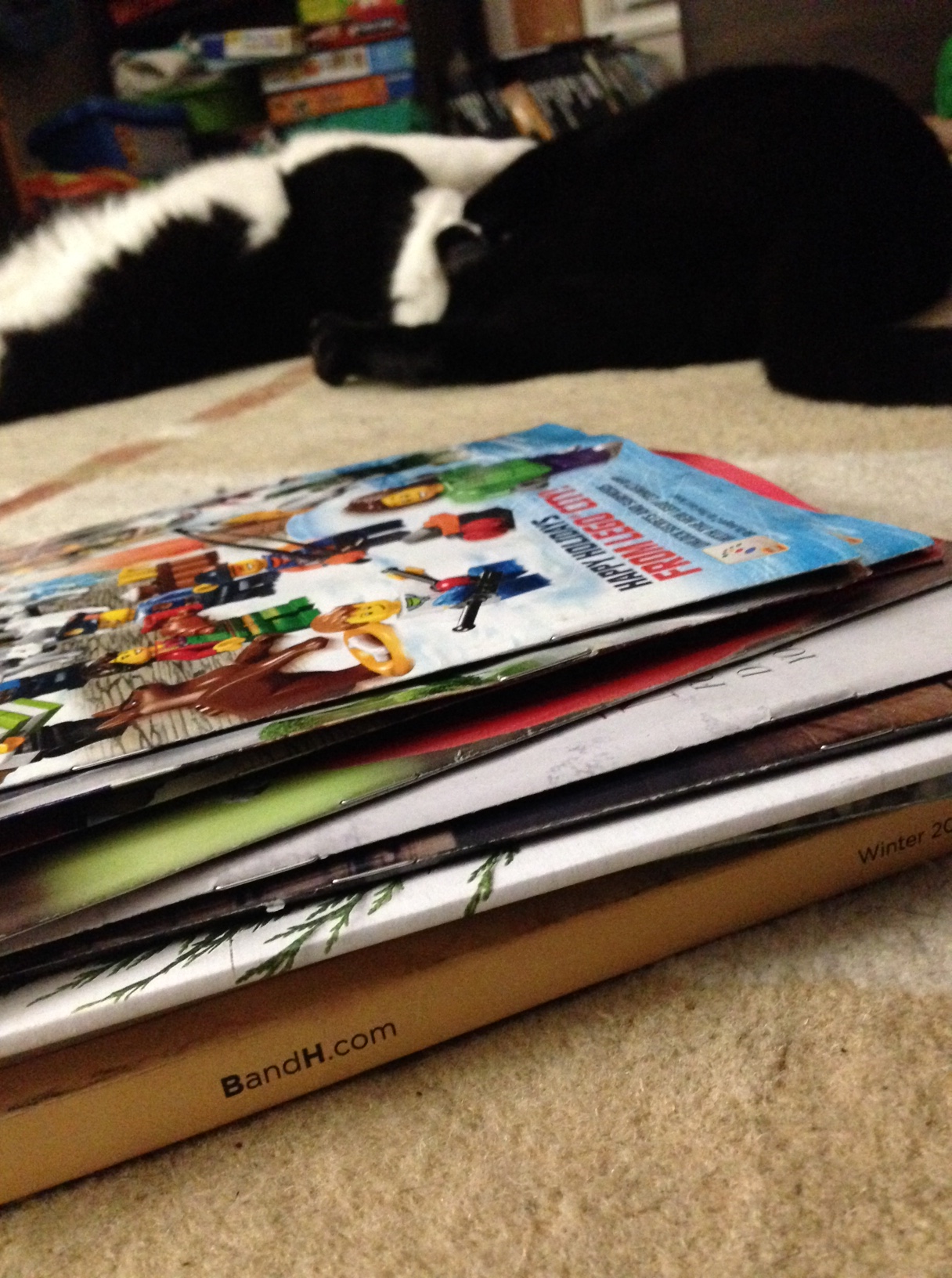
actual holiday catalogs that arrived today and cats fighting over them.

actual holiday catalogs that arrived today and cats fighting over them.

A defiant Butterbean stood, hands on his hips, in the middle of the sand, holding court with his adorable, blindsided, angry friends. I rushed over, trying to make it seem like no big deal, and the other four-year-olds tried to listen as I talked. To my son I whispered, “Everyone gets to believe what they want, and we don’t tell them they’re wrong. The story of Santa is about giving and kindness and magic, and some people remember how kind Santa was and they want to give to those who need. But some families feel that magic more and say that Santa is still alive and lives in the North Pole. That’s okay for them to say. And our story is okay for us to say. Everyone gets to believe what they want. We are right for us and they are right for them.”

“No,” he said.

Succinct. Bold. I’ll give him that. Intrinsic sense of justice, firm grasp of the concept of black and white. He has a strong future ahead.

But, and I’m not just saying this because the preschool parents are going to absolutely murderize me for parenting the kid who doesn’t believe Santa is actively watching and list-making, Butter needs to learn the nuance of belief, and of respect of belief. He needs to be okay with people thinking something different from what he thinks.

Peanut, his older brother, took very well to the idea of shrugging, and telling friends, “okay.” He is, by nature, a watcher. He observes and takes it all in, but doesn’t always engage. When people tell him about Santa or God or the tooth fairy, he just says, “okay.” He certainly doesn’t correct people when they’re wrong. (He tells me long stories about how other people, who do correct others, are boorish. But I don’t think he uses the word boor. Yet. Give me time.) Peanut never told any of the kids at school that he thinks Santa is just a story. I’ll ask him this year what the third-grade conversations are like. I don’t feel too protective of nine-year-olds. They can read and a shocking number of them have their own iPads. They’ll know about Santa soon enough.

I don’t want my children to squash other kids’ hopes and dreams. Some families tell the Santa story to cultivate the magic of the season, and I want them to feel good about that. I also want to feel good about what I teach my kids, because I have every right to believe something, even if it doesn’t conform to dominant culture.

I do think it’s upsetting that generations of parents have tried to coerce certain behaviors from their children by threatening them with Santa. Blackmail isn’t a kind way to parent. And I do recall quite clearly, after learning Santa isn’t real, thinking that nothing in the world is stable if I couldn’t trust the stories my parents told. I know they wanted to share the magic of the myth, and they meant well. My mom still gives me a gift from Santa. It frustrates me for a moment, until I remember it’s her right to find magic wherever she wants to.

And that’s the point of what we teach our kids. Because Santa is tradition. And family traditions are important whether December is about Jesus or Santa or Macabes or Solstice. We have to respect each others’ right to believe. Believe in magic or God or triumph over the night. Or belief that your parents will tell the truth.

Belief is good.

And the magic of the Santa story is powerful, so I don’t want to take it away from anyone. The idea of someone who gives selflessly to everyone is lovely. The idea of someone who reifies quantum physics theory and is everywhere at once is even more lovely.

channel-islands-mikebaird-190717-h

In our family, we teach our kids that the idea of Santa is an old legend about a man who gave to those in need. Not everyone. He gave coats to those who were cold, coats. He gave food to the hungry. And in celebration of Santa’s giving, we bring food and toys to the animal shelter, and socks and toiletries to the homeless shelter. We give backpacks of goodies to the homeless around town.

I don’t, however, tell the kids to expect that a flying sled will bring us presents from an uninhabitable part of the globe. Because I believe in magic and theater and natural wonder, but I don’t believe in lying. If Santa wants to buy or make and wrap and deliver, he’s welcome to bring gifts on over. And he’ll get all the applause. Otherwise, I work for the money, I choose the gifts, I force the boys’ dad to wrap them, and I’m taking the credit.

I felt awful at the playground today. And I apologized to the other mothers. (Note: I’m not being assumptively gendered. The only parents there today were moms. No grandparents, no dads, no aunts or uncles or nannies. Praised be rejection of normativities. But they were actually moms.) I told them we’re working on respecting others’ beliefs and traditions.

And they told me some kid last already told the four-year-olds that Santa isn’t real. So my son isn’t so much ruining the story as planting additional seeds of doubt that will blossom in a few years when they really lose faith in what their parents tell them.

Knowing that someone beat my kid to the decimation of Santa feels a bit better. Not just because we didn’t kill Santa for friends’ kids. But because they respect our beliefs, too. And they teach their kids the same thing we do: “every family believes what they need to, and what we believe is just right for us.”

Measure D

Peanut cast his first ballot in a national election when he was 2.5 years old. He didn’t pull any levers, because that’s illegal. But he was sitting on my hip in a sling while I voted. And I’ve been taking both boys to vote, despite my preference for early voting, to every election since.

I want to teach them voting is important. And I focus on reading them ballot initiatives and discussing candidates’ positions so they understand why people vote different ways, and why every vote matters.

Express yo'self

Express yo’self

We’ve been seeing dozens of signs on front lawns, a handful of mailing supplements, and billboards aplenty. No on D. Yes on D. And Peanut wants to know what’s with all the hubbub, Bub.

I talked to him about the measure itself. Measure D is Berkeley’s Tax on Distributors of Sugar-Sweetened Beverages initiative. It’s been framed as Berkeley vs. Big Soda. And as local government sticking its nose where it doesn’t belong. The truth is somewhere in between, as is always the case with ballot measures.

I told Peanut that the basic idea is, if this measure passes, when you buy a soda, you have to pay more. A few cents. And that money accumulates and pays for the government’s costs for healthcare and services. That the people who wrote the bill want the cost of making a choice that hurts your body higher so they don’t have to pay so much later to help bodies that are hurt by soda.

It’s not that simple, of course. But he’s eight. Voting needs to be simplified a bit when you’re eight.

Since Measure D taxes sugar-sweetened beverages, it doesn’t tax artificially-sweetened beverages, which studies have suggested are actually worse for bodies than sugar-sweetened beverages are. And I told Peanut this, that the tax isn’t for all sodas, or all unhealthy drinks. Just sugar-added drinks.

He shrugged. “If it’s bad for you, and the tax is only a few cents, you should vote for it.”

“Maybe. But if the goal is public health, why not chemically-sweetened sodas? Why not juice? Why not tax sugar itself?”

“Because,” he said. “Sugar can be used a little or a lot, but in soda it’s a lot. And soda doesn’t have protein or fat, just sugar.”

Now we’re talking, buddy.

We’ve gotten too many mailers from the Beverage Industry, which whine that the measure doesn’t tax sugar-added coffee drinks. It does tax them if they’re in a bottle on a shelf, but not if you order one freshly made. But the goal is not taxing sugar; the goal is to tax sugar-sweetened processed beverages. Adding sugar to coffee later is optional, even with frothy $5 coffee drinks with syrups and whipped cream. You can order those without syrup or whipped cream. You can’t order a Coke or Pepsi without syrup, nor can you order a Starbucks bottled, shelf-stable thingamabob without sugar. Because those drinks are processed and packaged with the sugar already added, they are, in fact, different. Soda manufacturers don’t have to like that difference, but it is still a difference.

So what about the public health benefit of reduced consumption and increased tax revenue for health education?

There’s no way to determine that consumption will go down based on a tax. People still smoke, despite tobacco taxes. But they do smoke less. People still drive, despite heavily taxed gasoline. They drive a smidge less when gas is over $5 a gallon. But the increased revenue from Measure D’s penny-per-ounce tax pays for healthy-eating education, so ideally it will have an aggregate effect where each additional tax collected will further drive down consumption. It might wind up disproportionately taxing poor and less advantaged residents who will drink soda for a variety of reasons, including the low cost offered by federally-subsidized sugar priorities and lack of access to healthy alternatives at neighborhood markets.

I had Peanut read the mailers we keep getting. Clearly, the American Beverage Association seems terrified of this initiative, because they’re pouring enough money into mailings to pay for the education of all Berkeley students ($11 million at last count; I have no idea what that would pay for, but it’s a gobsmacking amount of money to preserve the low cost of soda and makes me mad enough to vote for D regardless of the nuances).

The marketing efforts focus on how residents must be confused about Measure D.

Confused? Marketer, Berkeley has one of the most educated populations in the country. Don’t you worry your sweet corporate head about our confusion. We’ll be okay. Across the Bay, San Francisco is deciding a similar measure. Don’t worry your CCM degree about them, either. They’re pretty smart, too.

my son trying to escape Berkeley for San Francisco

my son trying to escape Berkeley for San Francisco

What would make Measure D successful despite its limitations is if it cracks the door for governments to push food producers toward actual food rather than lab-facsimiles of food. Ideally, this will get us talking about federal subsidies for sugar and corn syrup. Hopefully, Measure D will spur a diet soda tax. Perhaps Measure D will get us talking about the artificial colors, banned in other countries and in U.S. cosmetics, but legal in our food. Maybe Measure D will get some effort behind the nutrition programs in Berkeley, where we’re teaching our kids to grow, prepare, and eat healthful foods but face smaller and smaller budgets.

If nothing else, Measure D has allowed some good talks in our house about legislation, about nutrition, and about why it’s important to vote.

Go vote! Unless you’re eight. In that case, wait ten years. Sorry.

Love blogging? Look behind the curtain.

I attended and spoke at WordCamp San Francisco this year, and the experience, community, content, and implications blew my mind.

IMAG3641

Holy moly, did I ever.

I attended the technical sessions and understood, genuinely, 20% of what I heard in the weekend’s presentations. Okay, maybe 15%. I don’t know the acronyms, I don’t know the language. But I solved those small technicalities with a post-session questions to the friendly people around me. [I, in return, explained to them what recycled leather is. Misnomer. It’s upcycled leather scraps, not recycled anything. In fact, recycled leather is the plywood of fabrics. Or the Pringles of fabrics. Or…okay, that’s enough.)

More generally than not knowing the vernacular of development, though, I don’t know the thought processes behind building platforms and plugins. I’ve never thought about the structure on which my blogs reside.

Have you?

There’s the base structure of the web, of content management, of plugin modifications, of things I don’t have words for. I’ve simply never even thought about how the technology works. And I don’t think I’m alone.

What if you parked at your house every day, put your key in the door, and instantly it was the next morning? You’re refreshed from sleep and food, you’ve changed your clothes and cleaned up. But you have no idea how. You don’t know what the inside of a house looks like, you don’t know how plumbing and electricity work. You don’t know there a distinct structures for food, sleep, movement, entertainment. You don’t know about hot showers.

[Dude. Hot showers completely foreign and inaccessible? This metaphor is totally creeping me out.]

It would feel weird coming home and leaving again, right? With a black hole in which your living-slash-resting-slash-eating processes happen?

That’s now how I now feel about blogging. I feel as though I’m missing half of my blogging life by creating content and publishing it, without knowing the structures on which my blogs reside.

so many questions, even though I took this photo

And I want to learn the guts. I want to learn the language of coding, I want to teach that language to bloggers. Or, at least, I want to build/supplement/fortify a really awesome bridge from developers to bloggers, so we can consider the people behind the code-poetry on which our posts live. If we know that there are different rooms for different functions, if we actually choose the food instead of just fueling with whatever we’re given, if we learn the glory of a hot shower and know that we could, if we want, choose a bath instead, wouldn’t that bring more life to the ways in which we publish our writing, photography, and images?

You choose what type of paper you write on, right? You know what you do if you have to scribble on napkins and envelopes, then save them for later, right? You know how to translate your late night, sleep-drunk scribblings into posts? What about the digital napkins and envelopes and notebooks and Moleskins?

All through the conference—in Boone Gorges’s compelling call to contribute, volunteer, and consider pro bono code the same way we all volunteer in our communities; in Andrew Nacin’s talk about globalization and how to think about more than just language and access but to understand why those are important; through Matt Mullenweg’s State of the Word address about developing the future and democratizing publishing; in Mickey May’s celebration of announcing you don’t know and learning from the community of developers; in Josepha Hayden’s talk on writing for two audiences (the one that reads posts and the one that crawls them for search engines); in Tracy Levesque’s presentation on how to effectively teach software use–genuinely smart and engaging people talked about making code useful. For users.

Users.

I’ve never been called a user before. In my world I’m a writer, an editor, a blogger, a creative. I know my role in the agency world, consultant world, and publishing world. I have literally no clue about my role in the blogging world, despite having been a blogger since 2008. At WordCamp I felt like an exotic animal sitting in on the zookeepers’ meeting. They certainly respected my role and wanted to honor it. But I never realized brilliant people were building and supporting my blog for me. I assumed the toys and plants and prey staged in my exhibit were just there, but smart and resourceful zookeepers placed them there. Zookeepers? Blogkeepers? My extended metaphor is tiring me.

I’m used to talking with bloggers about writing. I’m not used to thinking about how my blogging behaviors affect the platform on which I publish.

Have you?

Your developers have.

Take a bow, Crew, Stage Managers, Lighting, Sound, Production, Costume, Marketing. Take a bow, Developers. You really have revolutionized publishing, democratizing what used to be a highly privileged act, and made it free and public. You have a lot more work to do, I know. I can’t wait to see what you come up with.

Thank you WordCamp. You rocked my world, and I shall now do my best to bring that sense of wonder and engagement to bloggers.

Did I do something right?

If I were to categorize my blog posts, I’m guessing 10% are literature and bookishness, 70% are teeth-clenched comedy about how I barely made it through the day with my adorable and irrepressible children, 10% are raw and unfiltered posts in which I admit to being completely overwhelmed by life, death, and the days when those two coincide, and 10% are crowdsourcing pleas in which I seek solutions for managing to stay alive during one of my indomitable children’s…um…phases.

I don’t know yet that I’ve posted enough “I do believe I might have done something right” posts to actually register on any NaptimeWriting highlights reel. This Halloween might be different.

Berkeley upcycles its trash into art. Hard to feel like I'm #winning next to that.

Berkeley upcycles its trash into art. Hard to feel like I’m #winning next to that.

I woke this morning totally panicked about our Halloween policy. The first few years, with just Peanut, we adhered to a “have two pieces a day until it’s gone,” policy, and despite relieving the bag substantially in the evenings, Halloween wore on WAY too long into November. Once we had two children old enough to carry a treat bag, we offered the idea of trading candy for books or toys, but Peanut, the oldest, would have none of it. We settled on a friend’s approach: two days of unfettered access, then all the candy goes away.

This year the kids loved the plan. They knew unfettered access still meant they had to eat three meals a day, all veggies and protein. They knew this was non-negotiable.

But they were like crazed maniacs on Halloween night, sprinting from house to house to maximize their haul. The four-year-old dashed up stairs, knocked on doors, beamed his brightest “HappyHalloweenthankyouandhaveagoodnight” as he grabbed all he could hold. And at 7:00 November 1, both kids were leaping on my bed, hollering, “go make eggs so we can have protein and then eat all our candy!”

I freaked out a bit.

I texted my most awesomely conscientious mom friends to ask their policy. One allows a single piece a day, and sneaks out the egregiously colored stuff. Another negotiated a trade of all but four pieces in exchange for a book.

Mmmmmm. Homemade caramel.

Mmmmmm. Homemade caramel.

I mentioned those candy-management options to my kids, who laughed and, I’ll be honest, openly judged those parents aloud for being “too unfair.” (I talked to them about fairness and candy and starving children. My grandmother would be proud.) After wolfing down their eggs, my sugar-fiend cherubs agreed to take the most toxic of their stash and trade it for the brands I trust. I stocked up on candy made with natural ingredients, colored with fruit, sweetened with organic sugar, and made sustainably so I could give their dad the stuff that will color your liver for months. (What? It’s not rude to give your ex toxic candy, right? Not the stuff with razor blades; just partially hydrogenated oils.) So some of what the boys devoured at 7:35am was candy that they’d already selected from my Alternative Treat stash.

But the haul was still grotesque. Gorgeous to the candy-loving child/teen/adult in me. Disgusting to the parent I have been posing as for almost nine years.

While they ate we talked about red dye #3 and red #40, blue #2, yellows #5 and 6. Coal tar, guys. Those colors, in more than 30% of your candy, are made from coal tar. Some are banned in other countries and some are banned in the U.S. in cosmetics, but not in food.

“Don’t care,” they shrugged. “it’s two days of the year. We never buy this kind of candy, we always eat well, and we worked hard to get it.” My eight year old genuinely said these things.

They wore me down. Not because they’re right, but because I am easily pushed off the perch from which I fear going too far toward the self-righteous Berkeley I both celebrate and disdain. I’m also freaking exhausted from all the negotiations and battles and teachable moments about brushing teeth and not calling names and being kind and embracing difference and standing up for anyone who’s being pushed around and treasuring people over things and …I’m seriously just exhausted. I was willing to look the other way while my kids are coal tar artificial colors, child-slave-labor chocolate, and highly processed high fructose corn syrup.

So they got as much candy as they wanted between meals today.

For the record, they were miserable cretins all day: whining, annoying each other, throwing fits, and flitting around like hummingbirds. I kept telling them that their behavior told me next year should be the Halloween of Two Pieces Total.

And then tonight, the big one called me downstairs when I finished the four-year-old’s bath. He showed me more than 60% of his remaining candy in a pile. Candy he likes as well as candy he likely wouldn’t have eaten. all the duplicates and several brands he knows his dad likes. All lumped in a big pile to trade. “What would this get me?” he asked. It was such a significant gesture from a candy hoarder (he keeps a stash of candy that remains uneaten from random holidays stored in a clandestine backpack; and he asks once every few months if he can eat one of his bits of treasure), such an unbelievable change of heart, that I told him he could pick a book and a toy for his efforts.

The little one, apparently done freaking out about how his socks never quite line up across his toes correctly, stomped down the stairs and surveyed Candy Central. He saw what his brother was trading away, and he shoved his pile at me. “I’m done with this. I don’t even want to trade. I’m just done.” He kept one bag of organic, vegan gummy bears.

"Don't worry, mom. We don't need candy, we have kale. And we don't need toys, we have cardboard."

“Don’t worry, mom. We don’t need candy, we have kale. And we don’t need toys, we have cardboard.”

Both my kids had way too much candy today. They each likely had 30 pieces of candy.

But they’re done. Done. They don’t care any more. The novelty has worn off. They want LEGOs and books, instead.

I don’t want to say this too loudly, or anything, but I might have inadvertently done something right this Halloween.